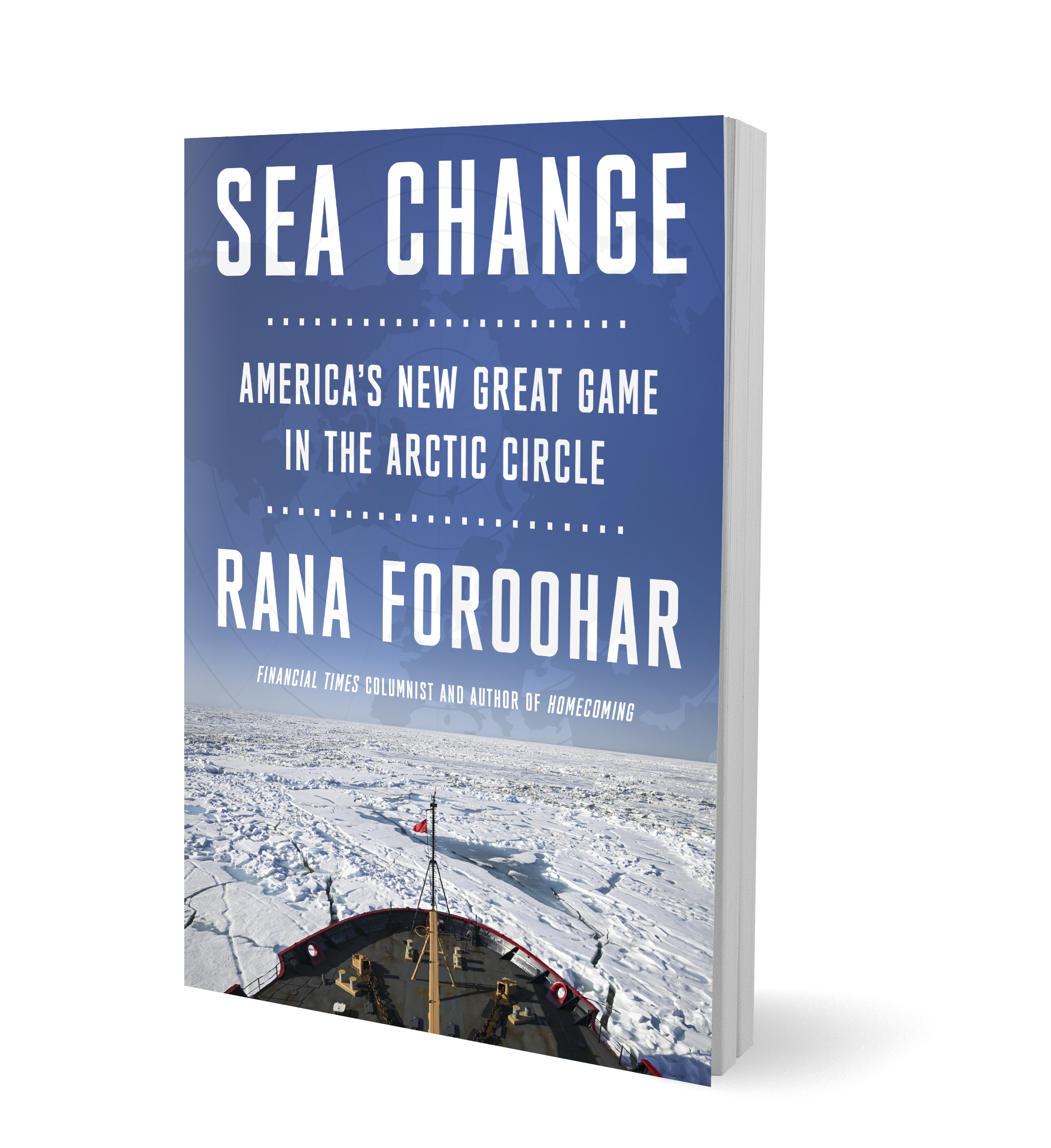
Sea Change: America’s New Great Game in the Arctic
“Foroohar offers fascinating glimpses into the future, describing, among other innovations, farms grown in shipping containers, sustainable homes fashioned by 3D printers, and affordable education programs that provide career paths for students and needed skill sets for regional businesses. Though the obstacles to untangling global interdependencies on oil, grain, and other resources are somewhat underdeveloped, Foroohar lucidly explains complex financial and political matters and draws sharp profiles of imaginative labor organizers, business leaders, and policymakers. This astute survey provides a welcome measure of hope.”
– Publishers Weekly
READ MOREThe world looks different from the North Pole. Most maps chart the planet from East to West. But look at the world from the top down, and you suddenly see America’s relative position anew. Russia dominates the region. Greenland suddenly seems important, too, as does Canada. China, a “near-Arctic” nation, is closer than you’d think. The US, by comparison, is small.
Why does this matter? Because the Arctic is melting, and as it does, it is becoming one of the most important economic and political zones in the world. New sea lanes opening across the North Pole will decrease transit time between Asia and Atlantic ports by half, reshaping trade, security and geopolitics in the process. Russia, China, and the US are in a battle to claim these new Arctic territories, as well as the minerals and gas that lie beneath.
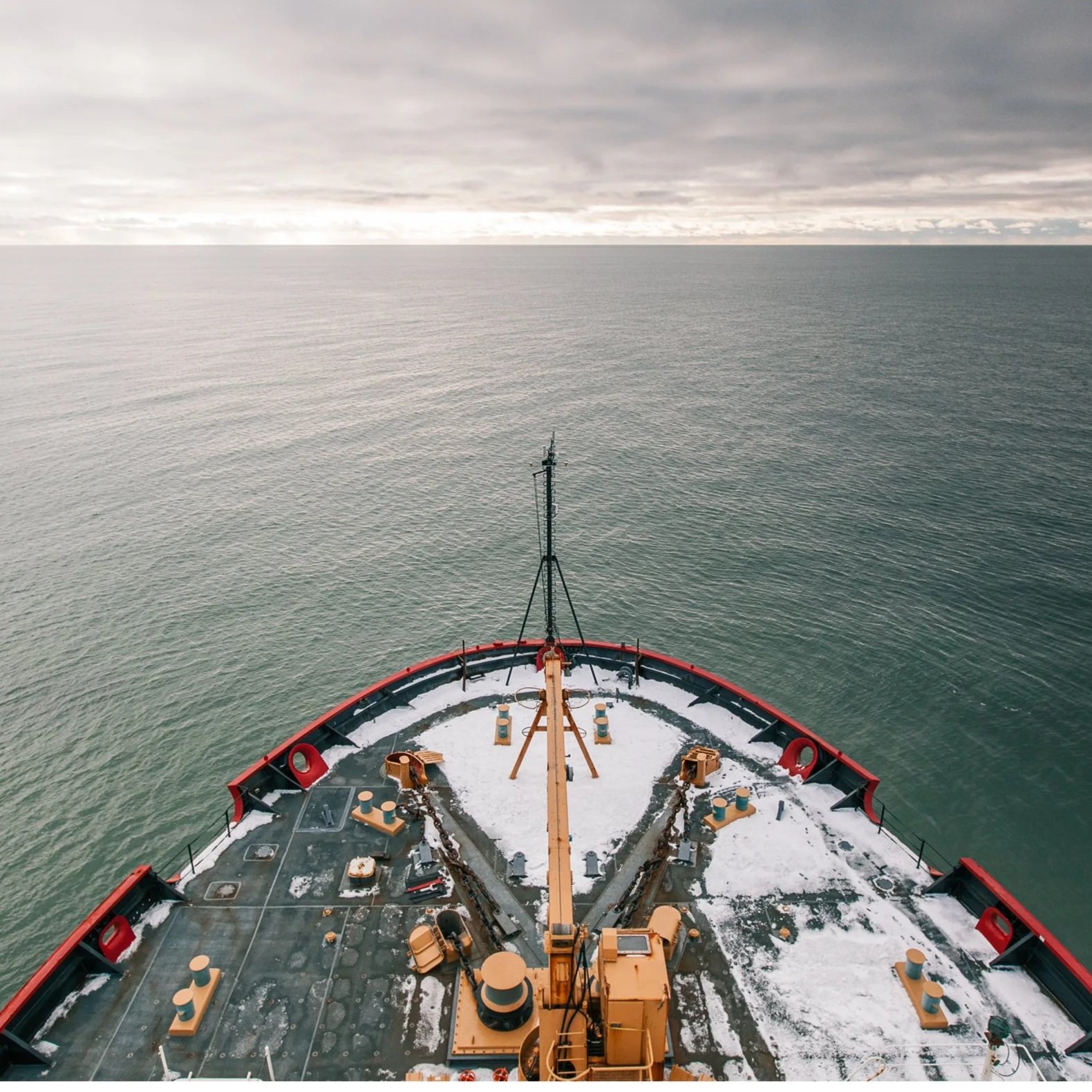
To do so, they’ll need ships that can break through six feet of ice in frigid waters. While Russia and China have dozens, America currently has just one in the Arctic– the Coast Guard cutter Healy. Foroohar was the first journalist to be given unfettered access to Healy and its crew on a three-week trip to the North Pole, where she discovered not only why ships are the new chips – a crucial source of geopolitical power in a changing world – but why no great national power has long endured without maritime power.
With the outsourcing of its industrial base over the last half century, America can no longer make its own ships. It’s now in a desperate – and bipartisan – effort to do so, collaborating and competing with countries such as Finland, Canada, Korea, Japan, Russia and of course China. Success will require thinking differently about logistics, financial markets, industrial production, and of course, political risk.
In the 19th century, the British and Russian empires battled for primacy in Central Asia, in a multi-decade struggle that became known as “The Great Game.” Today, there is a new Great Game being played, one in which nations will compete and collaborate for a new kind of multilateral power. The epicenter of the game isn’t Central Asia, or even modern hot zones like Ukraine, Gaza, or the South China Seas, but rather in the frigid waters of the Arctic. Foroohar will take you there, in a narrative non-fiction work bringing together the best of geoeconomic analysis and dramatic on scene reporting from the top of the world.
This book proves it: Rana Foroohar has an uncanny ability to sense seismic shifts in economics and politics before the rest of us. Sea Change reveals as much about China’s vision of the future as it does about the Arctic, but it is also an escapist voyage on the human scale, a sheer pleasure to read.
—Evan Osnos, staff writer at The New Yorker and author of The Haves and Have-Yachts
For centuries, maritime power has been a pre-requisite for economic and political supremacy. Today, America’s historic strength at sea is in danger of being eclipsed by China’s. In Sea Change, Foroohar gives us a page-turning tale of why ships matter as much as chips in the global economy, and why we must build again – at home and with allies abroad – to secure our future.”
—Admiral James Stavridis, retired four-star U.S. naval officer